Part I · The researcher
About Roman
An independent researcher of the Hellenistic and Hermetic traditions, who reads the old texts first and the commentary second.
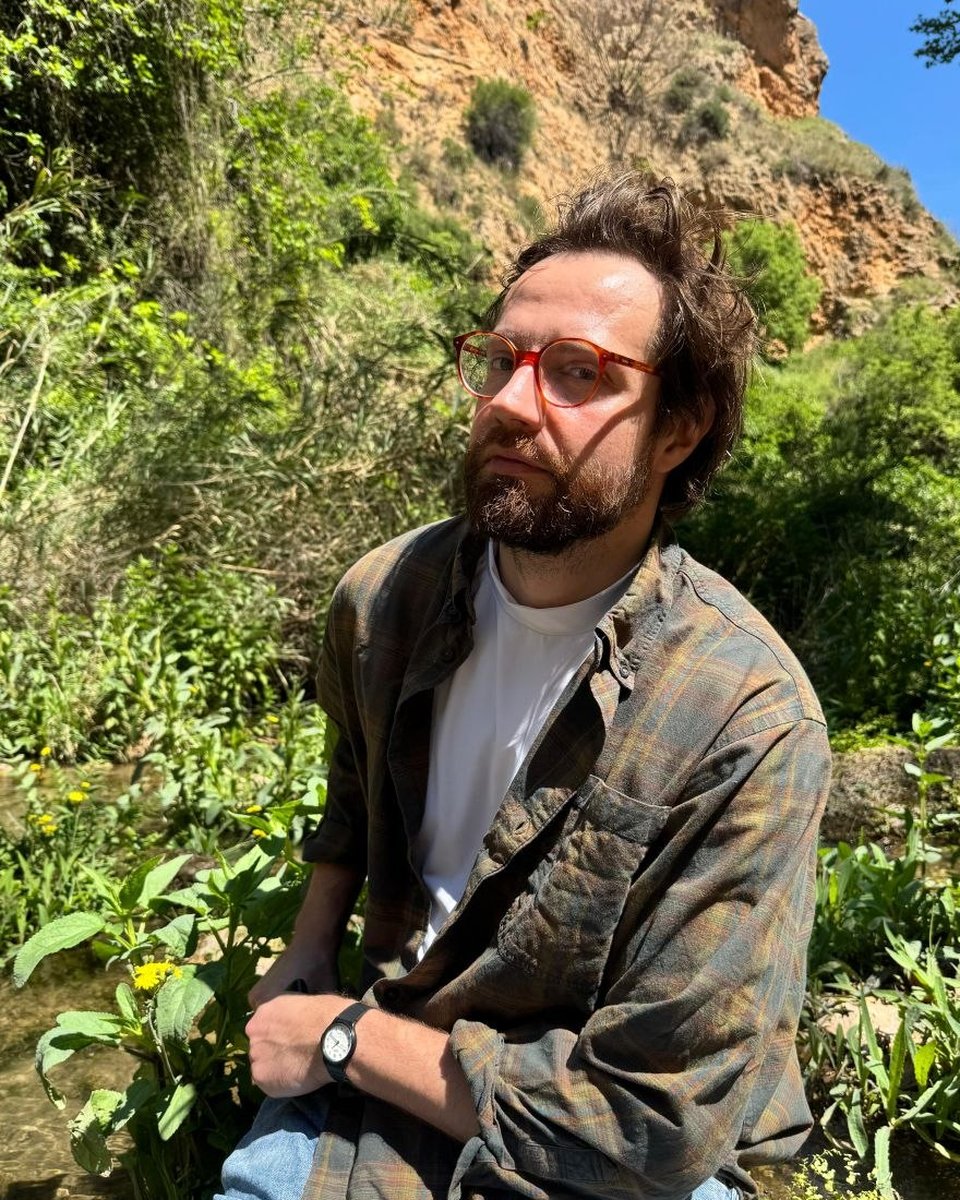
The short version
My name is Roman Oleksandr, and I'm an independent researcher of the Hellenistic astrological tradition1 and the Hermetic tradition2. I'm an introvert, drawn to deep questions, and I keep my own life private and happy. The work I enjoy most is slow reading: taking a text written two thousand years ago and asking what it is actually saying.
I am self-taught in the primary sources. I chose to learn from the translated Greek and Latin texts themselves, rather than take a paid certificate. No country licenses astrologers, and a certificate would not have taught me how to sit with Valens3.
I work independently. I haven't tied this work to a school or an institution, and I don't claim a title the field doesn't give out. I would rather you judge the work by whether you can check it.
How I came to the sources
I went to the old texts on purpose. The popular astrology I first ran into offered pleasant generalities and almost nothing I could use. The translated Greek and Latin manuals were different: they had rules, an order of operations, and ways of reasoning about time. The technique is harder, and it is the part that actually says something.
What held me was not a school, but a feeling for the tradition itself: its aesthetics, its language, the Greek myths that stand behind the signs, and the way the pieces connect.
I study these works in English translation, with the specific translations named on my Literature page: Valens, Dorotheus, Paulus and Ptolemy4 first, then the Hermetic writings that surround them. I keep a working library of these books and check every quotation I use against the translation I name.
“For a thing like this is an impotence, not of the science, but of those who practise it.”
Ptolemy, Tetrabiblos I.2, in the Loeb edition translated by F. E. Robbins.
I keep that line in view. If an interpretation fails, the fault is usually the interpreter's, and that is a good reason to show the working.
My approach
- Start from the text. I begin with what an ancient author wrote and in which book, and I name the translator, before I say what it means.
- Keep the layers apart. What the text says, what scholars have argued about it, and what later astrologers or occultists have made of it are three different things. I try to label which one I'm giving you.
- Say where it is uncertain. Some works survive only in Latin or Arabic from a lost Greek original. Some techniques are modern reconstructions. Scholars still disagree about details. I say so when it matters.
- Treat the Hermetic and the astrological as neighbours. The same Hermes is credited with philosophical dialogues and with technical books on astrology. I'm interested in how those two sides relate, without assuming they are one thing.
From research to practice
I also put the research to use in private chart readings, and I work the same way I study: calculate first, interpret second, and show which technique produced which statement. There is no magic in it. I use the interpretations of the astrologers before me and tell their story of the chart. Every soul leans somewhere different.
Before I begin a reading I sit quietly for a few minutes to clear my head, so nothing from my own day ends up in the pages. I read the chart on its own terms, not the person. A reading is written rather than spoken, so it can be returned to, and one follow-up question is included. Occasionally I decline a request if I can't honestly put myself into it.
What I promise anyone who writes to me
- Privacy. Your name, birth details and chart are never published. A first name is all I need.
- No fear. I don't predict death or illness. Hard periods are named with their dates and with what they're for.
- Your choices stay yours. A reading shows themes and timing. It doesn't tell you what to do.
- The right tool for the job. A reading isn't therapy, medicine, law or financial advice. If you're in crisis, I'll tell you it's the wrong tool.
- A refund if it isn't right. Even after delivery, if a reading doesn't feel right to you, write to me.
What I believe, and what I don't claim
I can't prove how astrology works, and I'm wary of anyone who says they can. The idea I follow is Carl Jung's6 synchronicity7: the sky and a life can run in step without one pushing the other. Jung used horoscopes to see difficult cases from another angle, and never claimed the planets cause anything. I don't either.
The same caution applies to the research. This tradition is a recent revival, and I treat my own conclusions as work in progress.
What I write
In essays, and in short videos, I keep returning to the same ground: the techniques of the Hellenistic astrologers, the Hermetic texts and the people who wrote them, and how those old ideas read when they are taken slowly, in the present. Recent essays have sat with the daimon in the ancient sources, with the sky of a given month, and with questions the old books still raise now.
The essays are gathered as Essays on Substack. Shorter pieces appear on Instagram, TikTok and YouTube.
How to write to me
You can reach me at byromanoleksandr@proton.me.
Sources & further reading
Outbound links to encyclopaedia articles, publishers and public-domain texts. I have checked that each address resolves.
- Hellenistic astrology. Wikipedia.
- Hermeticism. Wikipedia.
- Vettius Valens. Wikipedia.
- Ptolemy. Wikipedia.
- Claudius Ptolemy, Tetrabiblos, translated by F. E. Robbins. Loeb Classical Library, Harvard University Press. Article: Wikipedia. A public-domain English translation (J. M. Ashmand) is on Internet Archive.
- Carl Jung. Wikipedia.
- Synchronicity. Wikipedia.